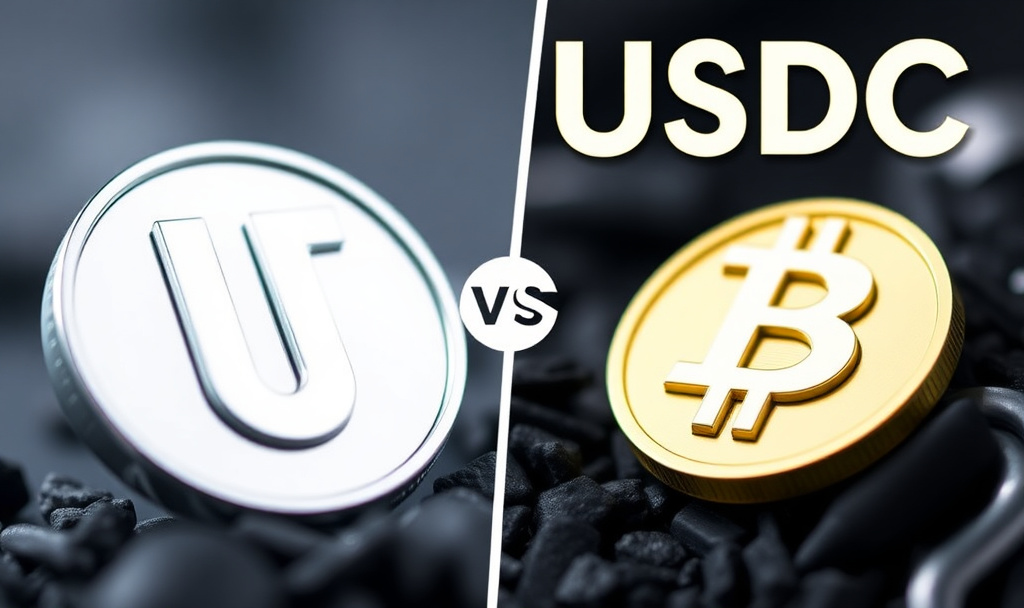
A beginner opens a crypto exchange for the first time, types “dollar” into the search bar, and sees two coins sitting close to the same price: USDT and USDC. Both look like $1. Both sound like digital versions of the U.S. dollar. Both appear on Binance, Coinbase, wallets, trading apps, peer-to-peer platforms, and DeFi tools. So the beginner makes the natural assumption: if both are around $1, they must be the same thing.
That is where the real investigation begins.
A stablecoin can look simple on the screen while carrying a whole structure behind it: the company that issues it, the assets backing it, the quality of its reserve reports, the laws around it, the exchanges that support it, the networks it runs on, the fees attached to moving it, and the risks that appear when markets become stressed. USDT and USDC may both aim to stay close to $1, but they do not have the same history, issuer model, transparency profile, regulatory exposure, global usage pattern, or beginner safety concerns.
This is why USDT vs USDC is not just a technical crypto question. It is a practical money safety question for freelancers receiving international payments, students trying to preserve value in weak currency countries, online business owners accepting digital dollars, creators using wallets, digital nomads moving funds across borders, and cautious beginners who do not want a small mistake to become an expensive lesson.
Stablecoins are designed to hold a stable value, usually close to $1, but they are not the same as money in a bank account. They are crypto assets. They can depeg. Platforms can freeze, restrict, delay, or suspend transactions. Wallet mistakes can cause permanent loss. Exchanges can change rules. Networks can become congested. Issuers can face regulatory pressure. Reserve confidence can rise or fall. The U.S. SEC has described certain stablecoins as crypto assets designed to track a reference asset such as the U.S. dollar on a one-for-one basis, but that design does not remove all risk. (sec.gov)
This guide explains USDT vs USDC for beginners in plain language, without hype and without fear. It will help you understand is USDT safe, is USDC safe, which one may be the safest stablecoin for beginners in different situations, and how to use stablecoins safely before risking money.
USDT vs USDC Explained Simply: Why Two “Digital Dollars” Are Not the Same
USDT is the ticker symbol for Tether, one of the oldest and most widely used dollar-pegged stablecoins in crypto. USDC is the ticker symbol for USD Coin, a dollar-pegged stablecoin issued by Circle. Both are called stablecoins because they are designed to stay close to the value of a stable reference asset, usually the U.S. dollar. In everyday beginner language, people call them “digital dollars” because one USDT or one USDC is supposed to represent roughly one U.S. dollar in crypto form.
But the phrase “digital dollar” can be misleading if beginners hear it too casually. USDT and USDC are not physical dollars. They are not the same as money held directly in an insured bank account. They are tokens issued by private companies, used on blockchains, traded on exchanges, and moved through crypto wallets. Tether says its tokens are pegged one-to-one with matching fiat currency and backed by Tether’s reserves, while Circle says USDC is backed by highly liquid fiat reserves held separately from Circle’s operating funds. (tether.to)
A simple way to understand the difference is to imagine two bottles of water on a shop shelf. Both bottles are clear. Both look clean. Both are labeled “water.” Both may cost the same price. But one bottle may come from a company with one type of testing process, while the other may come from a company with a different quality-control system, different inspectors, different storage methods, different reporting standards, and different legal obligations. A cautious buyer does not only ask, “Do they both look like water?”
A cautious buyer asks, “Who produced this?
How do I know what is inside?
Who checks it?
What happens if something goes wrong?”
That is the better way to compare Tether vs USD Coin. The question is not only whether both trade near $1 today. The deeper question is what supports that price, how transparent the issuer is, how easy it is to redeem or use the coin, how trusted the coin is during market stress, and how much risk a beginner is taking by using it for savings, payments, trading, or transfers.
USDT is known for massive global liquidity. It is used heavily by traders, exchanges, peer-to-peer crypto users, and people in countries where access to dollars may be difficult. USDC is often viewed as more regulation-aligned, more institution-friendly, and more transparent because of Circle’s U.S.-based structure and reserve reporting. Circle’s public materials state that USDC reserve reporting has existed since 2018, with reserve assets now reported through more frequent public disclosures. (Circle)
For a beginner, the lesson is clear: the same $1 price does not mean the same risk. A stablecoin’s safety depends on more than the number you see on your exchange screen. You must also understand reserves, regulation, liquidity, network choice, platform risk, wallet safety, and depeg history.
Is USDT Safe for Beginners? The Strengths, Risks, and Hidden Questions
USDT is popular because it is everywhere. Many beginners first meet USDT on Binance, peer-to-peer crypto platforms, trading apps, and international payment conversations. In many markets, especially outside the United States, USDT is the stablecoin people recognize first. A freelancer may be offered payment in USDT.
A trader may see more USDT trading pairs than USDC pairs.
A person in a weak currency country may hear that USDT is a way to hold dollar value without opening a U.S. bank account. A Binance beginner may notice that many coins are traded against USDT and assume it is the default crypto dollar.
That wide usage is one of USDT’s biggest strengths. Liquidity matters because it affects how easily you can buy, sell, exchange, or transfer a stablecoin. If many platforms support USDT, it may be easier to find a buyer, seller, trading pair, wallet option, or peer-to-peer merchant. This is why USDT often appeals to beginners who need fast access, international crypto payments, cross-border movement, or peer-to-peer stablecoin markets.
USDT can be useful in practical situations. A freelancer in Nigeria, Argentina, Kenya, Pakistan, or another country with currency pressure may receive USDT from an overseas client because both parties can settle faster than a bank transfer. A small online business owner may use USDT to pay a supplier who prefers crypto.
A trader may hold USDT between trades instead of constantly converting back to local currency. A student may use USDT to preserve short-term value while waiting to pay for an online service. These are real use cases, and they explain why USDT has become deeply embedded in global crypto activity.
But is USDT safe for beginners? The balanced answer is: USDT can be useful, liquid, and widely supported, but it is not risk-free and should not be treated like a guaranteed savings account.
The first beginner concern is reserve confidence. Tether publishes transparency and reserves information, and its public transparency page says its tokens are backed by reserves. Its reserves page also refers to reserve reports, including recent reporting periods. (tether.to) The beginner issue is that many cautious users still compare Tether’s reporting style with the reporting style of other issuers and ask how much transparency is enough for their own comfort. A beginner does not need to become an accountant, but they should understand that reserve trust is central to stablecoin safety.
The second concern is regulatory scrutiny. USDT has faced years of questions from regulators, analysts, and market observers about reserves, compliance, and transparency. That does not mean USDT will fail, and it does not mean every USDT user is doing something risky. It means beginners should avoid blind trust. In crypto, popularity is not the same as safety. A coin can be widely used and still carry risks that must be understood.
The third concern is frozen funds. Some beginners believe crypto always means no one can freeze anything. That is not true for major centralized stablecoins. Tether has stated that it has cooperated with law enforcement freezes, including a 2026 announcement about freezing USDT connected to identified addresses. Reuters also reported that Tether said it had frozen billions of dollars’ worth of tokens linked to illicit activity. (tether.io) For normal users, this may sound reassuring from a crime-prevention perspective, but it also teaches an important lesson: USDT is not the same as holding cash under your control with no issuer power involved.
The fourth concern is network mistakes. USDT exists on multiple blockchains, including networks such as Ethereum, Tron, Solana, BNB Chain, and others depending on platform support. A beginner may think “USDT is USDT,” but exchanges and wallets often require the exact same network on both the sending and receiving side. If you withdraw USDT on one network and send it to an address or platform that does not support that network, your funds may be delayed, difficult to recover, or lost.
The fifth concern is exchange dependence. Many beginners do not hold USDT in a private wallet. They keep it on Binance, Kraken, KuCoin, OKX, Coinbase, or another exchange. That adds another risk layer. You are not only trusting USDT; you are also trusting the exchange account, withdrawal rules, identity checks, local restrictions, security settings, and customer support process. This is why crypto beginner safety is never only about choosing the stablecoin. It is also about choosing the platform.
USDT may make sense for beginners who need global liquidity, peer-to-peer access, many trading pairs, and broad exchange support. But beginners should watch reserve updates, exchange rules, local regulations, network selection, withdrawal fees, and the temptation to treat USDT as a bank account. USDT can be a tool, but it should not become a place where a beginner keeps all emergency savings without understanding the risk.
Is USDC Safe for Beginners? The Strengths, Risks, and What Makes It Different
USDC is often described as the more transparent and regulation-friendly stablecoin option, especially for users who operate through U.S.-based platforms, institutional crypto services, fintech apps, and Coinbase-connected products. Circle, the issuer of USDC, presents USDC as a regulated digital currency redeemable one-to-one for U.S. dollars, and Circle says USDC is fully backed by highly liquid reserves. (Circle)
This is why many cautious beginners ask, is USDC safe or “is USDC safer than USDT?” USDC often appeals to people who want a stablecoin with stronger public reporting, clearer U.S. regulatory alignment, and a more institution-friendly reputation. For a beginner who uses Coinbase, USDC may feel easier to understand because Coinbase has historically been closely associated with USDC access and user education. USDC is also widely used in DeFi apps, wallets, payments, and blockchain ecosystems.
One of USDC’s strengths is transparency. Circle states that it has published reserve reports for years, and its disclosures describe reserve management with cash and short-duration U.S. Treasury exposure through regulated financial infrastructure. (Circle) For beginners, this matters because transparency helps users ask better questions: What backs the stablecoin? Where are the reserves? How often are reports published? Who provides assurance? What happens if banks, regulators, or markets come under stress?
However, transparency does not remove all risk. The most important proof is USDC’s own history. In March 2023, USDC lost its peg after Circle disclosed exposure to Silicon Valley Bank during the bank’s collapse. A Federal Reserve note later described how USDC traded as low as 86 cents during the depeg stress. (Federal Reserve) This event is important for beginners because it shows that even a well-known, transparent stablecoin can face price pressure when the market becomes worried about reserve access.
That does not mean USDC is unsafe in every situation. It means “more transparent” does not mean “impossible to lose money.” A stablecoin can have strong reporting and still face banking exposure, panic selling, exchange delays, liquidity stress, or redemption uncertainty. This is one of the most important lessons in stablecoin safety: the peg is a goal, not a magic shield.
USDC also carries platform and regional access risks. Some users may find USDC easier on Coinbase but less common in local peer-to-peer markets. Some exchanges may support USDC on certain networks but not others. Binance, for example, announced in 2024 that it would stop supporting USDC deposits and withdrawals on the Tron network after Circle discontinued USDC support on Tron. (Binance) That matters because a beginner who learned one habit last year may face different network support this year.
USDC also has freeze and compliance risk. Circle’s USDC terms state that Circle may block certain USDC addresses and freeze associated USDC in cases it determines may involve illegal activity or violations of its terms. (Circle) For law-abiding users, this may sound like normal compliance, but beginners should still understand that USDC is not the same as Bitcoin. It is an issuer-controlled stablecoin with rules, terms, and compliance mechanisms.
There is also smart contract risk and DeFi risk. If a beginner holds USDC in a simple exchange account, their main risks may be exchange security, account restrictions, issuer risk, and price stability. But if they put USDC into a DeFi lending app, liquidity pool, bridge, yield farm, or smart contract, the risk changes. Now they are not only exposed to USDC. They are also exposed to code bugs, hacks, bridge failures, liquidation rules, fake websites, wallet approvals, and high-yield traps.
USDC may appeal more to cautious beginners who care about transparency, U.S.-based issuer structure, institutional trust, and Coinbase-style simplicity. But USDC is still a crypto asset, not a risk-free savings account. A beginner should verify current reserve reports, check local availability, understand the network being used, avoid unknown DeFi products, and never assume that a stablecoin cannot depeg.
USDT vs USDC Safety Comparison: Reserves, Regulation, Liquidity, Depegging, Fees, and Real Beginner Use Cases
The best way to compare USDT vs USDC is to stop asking, “Which one is always better?” and start asking, “Which one is better for this specific use case, on this platform, in this country, on this network, with this amount of risk?”
Here is a practical beginner breakdown.
Wider global liquidity: USDT usually has the advantage. It is heavily used by traders, peer-to-peer merchants, international crypto users, and exchanges across many regions. If you are in a country where most P2P sellers quote USDT, or you are trading pairs that mostly use USDT, it may be easier to move in and out of USDT quickly.
Transparency and regulatory alignment: USDC is often seen as stronger here because Circle is U.S.-based, publishes reserve information, and positions USDC around regulatory and institutional trust. Circle also says USDC is natively supported across many blockchain networks, including Ethereum, Solana, Base, Arbitrum, Polygon, and others. (Circle)
Peer-to-peer market use: USDT is often more common in P2P markets, especially in emerging markets and countries where users want dollar access outside traditional banking. This can make USDT practical, but P2P users must be careful with scams, fake payment proofs, chargebacks, exchange account freezes, and local law issues.
Coinbase users: USDC may feel easier because of Circle’s relationship with the U.S. crypto ecosystem and USDC’s strong support across Coinbase-related products. Coinbase’s own wallet materials discuss USDC use across networks such as Ethereum, Base, Arbitrum, BNB Chain, Avalanche, Polygon, Optimism, and Solana. (Coinbase Help)
Traders: Many traders use USDT because trading pairs, futures markets, and global exchange liquidity often center around it. That does not automatically make USDT safer. It simply makes it more liquid in many trading environments.
Cautious beginners: USDC may appeal more to cautious beginners who prioritize transparency, reserve reporting, and regulatory alignment. But cautious beginners should still remember the 2023 USDC depeg and understand that transparency reduces some questions but does not eliminate stablecoin risks.
Network choice: This is where many beginners lose money. USDT and USDC can exist on multiple networks, including Ethereum, Tron, Solana, Base, Arbitrum, Polygon, and BNB Chain depending on the stablecoin and platform. The network is like the road your money travels on. If the sender uses one road and the receiver expects another, the transfer may fail, become stuck, or require complicated recovery.
A beginner moving money from an exchange to a wallet should check four things before sending:
- The exact coin: USDT or USDC.
- The exact network: Ethereum, Tron, Solana, Base, Polygon, Arbitrum, BNB Chain, or another supported chain.
- The receiving wallet’s supported networks.
- The withdrawal fee and minimum withdrawal amount.
Coinbase warns users to select the correct network for assets that are supported only on certain networks to avoid lost funds. (Coinbase Help) That warning is not small. For beginners, it may be the difference between a smooth transfer and a painful support ticket.
Now look at the real beginner examples.
Example 1: A freelancer receiving payment from a client abroad.
If the client can only send USDT because that is what their exchange supports, USDT may be practical. But the freelancer should agree on the exact network, confirm fees, send a small test transaction first, and avoid leaving the full payment on an exchange for too long without a plan. If the freelancer prefers USDC because of transparency, they should confirm the client can actually send USDC on a supported network.
Example 2: A student trying to preserve value in a weak currency country.
The student may see USDT or USDC as a way to escape local currency inflation. That may feel practical, but it still carries stablecoin risk, platform risk, phone theft risk, wallet seed phrase risk, and legal risk. The student should not put all school fees or emergency money into one stablecoin.
Example 3: A beginner buying stablecoins on Binance for the first time.
The beginner may see more USDT options than USDC options, especially in trading or P2P sections. Before buying, they should check the seller, exchange rules, withdrawal networks, and whether they are buying for trading, savings, payment, or transfer. The right choice depends on the purpose.
Example 4: A Coinbase user wondering whether USDC is safer.
USDC may feel more natural for a Coinbase user because Coinbase-connected tools often support USDC clearly. But the user should still understand that USDC is not a bank deposit, can depeg, and can be affected by issuer terms, account rules, and network mistakes.
Example 5: A person moving money from an exchange to a wallet.
This is one of the most dangerous beginner moments. The person may copy a wallet address and rush the withdrawal. A safer process is to send a small test amount first, wait for it to arrive, confirm the network, and then send the larger amount only if everything worked.
Depegging is another major safety issue. A stablecoin depeg happens when the stablecoin trades below or above its expected $1 price. This can happen because of panic, redemption delays, reserve concerns, exchange liquidity problems, banking stress, or market rumors. USDC’s 2023 depeg is a real reminder that even large stablecoins can temporarily move below $1. (Federal Reserve)
Which Stablecoin Should Beginners Choose: USDT, USDC, or Both?
The honest answer is that there is no single stablecoin that is perfect for every beginner. The safer choice depends on where you live, which exchange you use, why you need the stablecoin, how long you plan to hold it, which networks are available, how comfortable you are with issuer transparency, and how much liquidity you need.
USDC may appeal more to cautious beginners who prioritize transparency, reserve reporting, U.S.-based issuer structure, and regulatory alignment. USDT may appeal more to beginners who need global liquidity, peer-to-peer access, many exchange trading pairs, and broad usage across international crypto markets. Neither should be treated as 100% safe. Neither should hold all your money. Neither removes the need for education.
A beginner asking USDT or USDC which is better should think in use cases. If you are using Coinbase and want a stablecoin that feels straightforward inside that ecosystem, USDC may be easier. If you are using Binance P2P in a country where most merchants quote USDT, USDT may be more practical. If you are a freelancer, the best coin may be the one your client can send safely on a low-fee network you both understand. If you are moving funds into DeFi, the question is not only USDT vs USDC; it is also whether the DeFi platform itself is safe.
Use these practical safety rules before using either stablecoin:
- Do not keep all your money in one stablecoin. Diversification does not remove risk, but it can reduce the damage if one issuer, platform, or network has a problem.
- Do not treat stablecoins like insured bank deposits. FDIC guidance has warned that deposit insurance does not protect customers against the failure of non-bank crypto custodians, exchanges, brokers, or wallet providers. (fdic.gov)
- Use reputable exchanges and wallets. Avoid unknown apps, fake wallet links, and social media “support agents.”
- Check the network before sending. USDT on Tron, USDT on Ethereum, USDC on Base, and USDC on Solana are not the same transfer path.
- Send a small test transaction first. A $2 test can protect you from a $2,000 mistake.
- Avoid random high-yield stablecoin offers. If someone promises easy returns for locking USDT or USDC, the risk may be hiding in the platform, not the stablecoin.
- Learn the difference between exchange risk and stablecoin risk. USDC may be fine while your exchange account is frozen. USDT may be liquid while your wallet seed phrase is stolen. These are different risks.
- Keep emergency cash outside crypto. Stablecoins can be useful, but rent, food, medical needs, and urgent family money should not depend entirely on crypto access.
- Verify reserve and regulation updates regularly. Stablecoin rules are changing. In 2026, U.S. rulemaking around payment stablecoin issuers continued under the GENIUS Act framework, including requirements for permitted issuers and foreign issuer treatment. (Federal Register)
- Never invest money you cannot afford to lose. Stablecoins are designed to reduce volatility, not to erase risk.
Join Crypto Digest Newsletter Founding Membership
If you are serious about learning crypto without gambling with confusion, join Crypto Digest Newsletter Founding Membership for simple, beginner-friendly crypto explainers, stablecoin safety breakdowns, wallet guides, exchange tutorials, risk alerts, and practical crypto education before you risk your money.
Crypto Digest is built for beginners who want plain-English guidance, not hype. You will learn how USDT, USDC, wallets, exchanges, networks, fees, DeFi apps, crypto scams, and digital dollar tools actually work so you can make calmer, better-informed decisions. No profit promises. No guaranteed safety claims. Just practical education designed to help you avoid expensive beginner mistakes.
The final answer to the title is this: USDC may appeal more to cautious beginners who prioritize transparency and regulatory alignment, while USDT may appeal more to beginners who need global liquidity, peer-to-peer access, and wider exchange support. But neither USDT nor USDC is risk-free. The safest beginner strategy is education, diversification, careful platform choice, small test transactions, regular verification, and never treating any stablecoin like a magic dollar with no risk behind it.
Frequently Asked Questions
1. Is USDT safer than USDC?
USDT is not automatically safer than USDC, and USDC is not automatically safer than USDT for every person. USDT often has stronger global liquidity and wider peer-to-peer usage, which can make it more practical in many countries. USDC is often seen as more transparent and regulation-aligned, which may appeal to cautious beginners. The safer option depends on your country, platform, purpose, network, and risk tolerance.
2. Can beginners lose money with USDT or USDC?
Yes, beginners can lose money with USDT or USDC. Loss can happen through depegging, exchange failure, frozen accounts, scams, wrong-network transfers, hacked wallets, fake apps, high-yield traps, or selling during panic. Stablecoins are designed to stay near $1, but they are still crypto assets and should be used carefully.
3. Why do USDT and USDC sometimes move below $1?
USDT and USDC can move below $1 when the market becomes worried about reserves, redemptions, regulation, banking exposure, exchange liquidity, or broader crypto panic. A stablecoin’s price depends on confidence. When confidence weakens, even temporarily, traders may sell below $1 until the market believes the peg is stable again.
4. Should I keep my savings in stablecoins?
You should not keep all your savings in stablecoins. Stablecoins can be useful for payments, transfers, trading, and short-term crypto liquidity, but they are not the same as insured bank deposits. A safer beginner approach is to keep emergency cash outside crypto, avoid concentrating everything in one stablecoin, and only use stablecoins with money you can afford to risk.
5. What is the safest way for a beginner to use USDT or USDC?
The safest way is to start small, use reputable platforms, verify the coin and network before sending, send a test transaction first, avoid random yield offers, protect your wallet recovery phrase, check reserve and regulatory updates, and never rush because someone online is pressuring you. Stablecoin safety is not only about choosing USDT or USDC; it is about using them with careful habits.